Solid Oak, Veneer or Mango Wood? What You Are Paying For
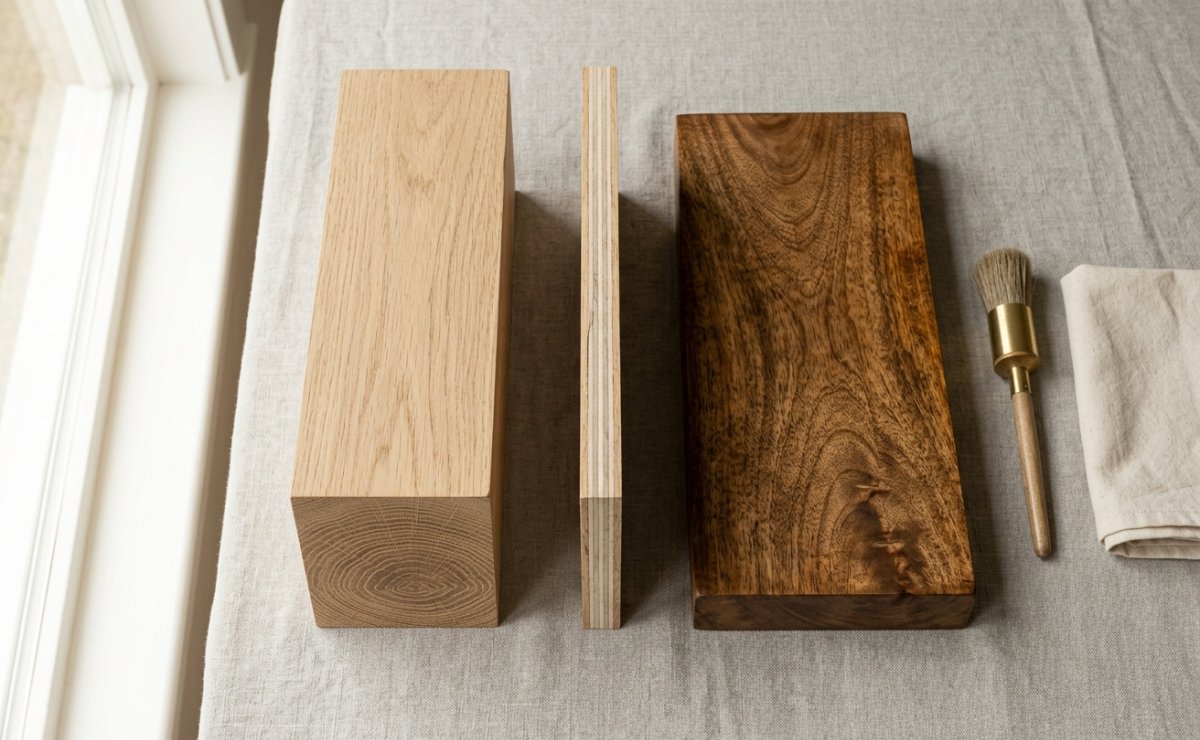
Two tables can look almost the same in a photograph and still differ by hundreds of pounds. Most of the difference is in what is under the surface.
Solid oak
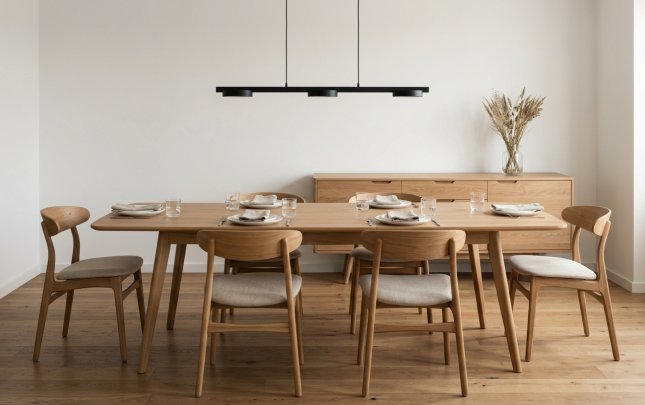
Every part is cut from the tree, so the grain runs all the way through. Scratches can be sanded out and the piece refinished many times. Solid oak is heavy and moves a little with the seasons, which is why good makers leave room for it to expand. We use it for legs, frames and tops that take the most wear, as on the Verona dining table.
Oak veneer
A thin layer of real oak bonded to a stable core. Veneer stays perfectly flat over a large area, so it suits long sideboards and wardrobe carcasses, and it is lighter and kinder on the price. It can be lightly sanded once, not reworked again and again.
Solid mango wood
A dense hardwood from trees that have stopped bearing fruit. It has a warm brown tone and a lively grain that varies from board to board, so no two Hudson tops are the same.
- Choose solid wood for pieces you expect to keep for decades.
- Choose veneer for large, flat surfaces and a lighter piece.
- Whatever you choose, use mats under hot dishes and wipe spills promptly.